To prep a house for exterior painting in the Pacific Northwest, you clean off the moss and mildew, let the wood dry out, fix anything loose or rotten, and prime bare spots before a drop of finish paint goes on. In our climate, prep matters more than the paint itself, because moisture is what makes paint fail.
This guide walks through what a good painter does to get a Western Washington house ready, what it costs when the siding needs extra work, and the jobs you can do yourself before the crew shows up.
Why prep matters more here
Western Washington siding spends much of the year damp. Fall and winter rain, shade from big evergreens, morning fog and long gray stretches keep wood wet for weeks at a time. That moisture causes the problems painters see on almost every house:
- Mildew. The gray or black speckles on eaves, north walls and under porch roofs. It grows on dirt and moisture and will come back through new paint if it is not killed.
- Moss and algae. Green growth on shaded siding, decks, fences and the lower courses near the ground.
- Peeling and blistering. Water trapped behind the paint pushes it off the wood.
- Rot. Soft spots at window sills, trim corners, fascia ends and the bottom of siding boards where water sits.
New paint over any of these is wasted money. It may look good in August, then start failing after the first wet winter.
The prep steps, in order
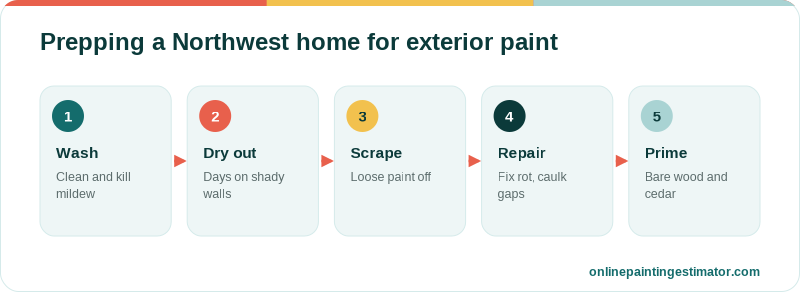
1. Wash the house
Most painters pressure wash or soft wash the siding, trim and eaves to remove dirt, chalky old paint, cobwebs and loose flakes. Good painters keep the pressure low enough to avoid gouging cedar or forcing water behind the siding. Washing is usually included in exterior prices.
2. Treat mildew and moss
Washing alone often leaves mildew spores behind. Painters apply a mildew cleaner, let it work, then rinse. Moss on the siding or trim gets scrubbed or scraped off. If the roof is mossy, plan to have it cleaned before the house is painted, not after, so runoff does not stain the fresh paint.
3. Let the wood dry
This is the step that takes patience. Wood that looks dry on the surface can still hold water inside. Many painters wait a day or two after washing in dry weather, longer on shady walls, and some check with a moisture meter before priming. Rushing this step is one of the most common reasons paint peels in the Northwest.
4. Scrape and sand loose paint
Every bit of loose, flaking or blistered paint comes off. Edges get sanded so the old paint feathers into the bare wood instead of leaving a ridge that shows through. On older homes, this is often the biggest part of the job.
Built before 1978? Scraping and sanding can disturb lead paint. The painter must be certified for lead-safe renovation (RRP) and contain the dust and chips. Our guide to painting a pre-1978 home explains what a lead-safe job looks like.
5. Repair rot and damage
Soft wood gets cut out and replaced, or filled with an epoxy or exterior filler if the damage is small. Sills, trim corners and fascia boards are the usual spots. Most estimates price repairs separately, because nobody knows how much rot is behind the paint until scraping starts.
6. Caulk gaps and seams
Painters caulk gaps around windows, doors and trim joints to keep water out. They should not caulk the bottom edges of lap siding boards, because those gaps let the wall breathe and drain.
7. Prime bare wood
Any bare wood gets primer before the topcoats. Cedar and redwood need a stain-blocking primer so the natural tannins do not bleed through as brown streaks. Then the house gets its finish coats, usually two for a lasting job.
How condition changes the price
The more prep a house needs, the more the job costs. Our free painting estimator asks about condition for exactly this reason. Here are typical prices for a two-story home with lap or fiber cement siding, pressure washing included, before sales tax:
| Home | Good condition | Fair condition | Poor condition |
|---|---|---|---|
| 2,000 sq ft | $6,000 to $10,000 | $6,900 to $11,500 | $7,800 to $13,000 |
| 2,500 sq ft | $7,500 to $12,500 | $8,650 to $14,350 | $9,750 to $16,250 |
“Good” means the paint is mostly sound with little peeling. “Fair” means some peeling, chalking or mildew that takes real scraping and spot priming, about 15% more. “Poor” means widespread peeling, bare wood or heavy weathering, about 30% more. Rot repair is usually extra on top of these.
The takeaway: repainting before the paint fails is the cheapest way to own a painted house in the Northwest. Our guide to what it costs to paint a house in Washington covers the other things that move the price, like siding type and stories.
What you can do before the painters arrive
You don’t need to do the washing or scraping yourself, and on a pre-1978 home you shouldn’t. But a few simple jobs make the crew’s work faster and the paint last longer:
- Trim plants back. Cut shrubs and branches back at least a couple of feet from the siding. Plants against the wall keep it damp and block ladders.
- Clear the gutters. Overflowing gutters soak the fascia and siding below them.
- Clear the walls. Move grills, patio furniture, planters, hoses and decor away from the house.
- Point out problem spots. Show the painter any soft boards, leaks or areas that always stay wet.
- Plan for water and power. Crews usually need an outside faucet and an outlet.
- Handle pets and cars. Keep pets inside and park away from the house during washing and painting.
If you also want a fence or deck done, mention it at the start. Our fence painting and staining cost guide shows typical prices, and it is often cheaper to add while the crew is already set up.
Timing prep around the rain
Exterior prep and painting need a run of dry days, not just one. In Western Washington, the most reliable window is June through September, with some workable stretches in late spring and early fall. A good painter watches the forecast, preps when the weather allows, and does not prime or paint wood that is still wet. Our guide to the best time to paint a house exterior in Western Washington goes deeper on temperature, dew and booking.
Winter is a good time to plan. You can walk around the house now, note the peeling, mildew and soft spots, and get estimates while painters still have summer dates open.
Questions to ask about prep
When you compare estimates, ask each painter to spell out the prep:
- Do you pressure wash or soft wash, and do you treat mildew?
- How long do you let the wood dry before priming?
- How much scraping and sanding is included?
- How do you price rot repair?
- What primer do you use on bare wood and cedar?
If one bid lists every step and another just says “prep included,” that gap often explains the price difference. Our guide on how to read a painting estimate shows what else to look for.
Get your exterior price
Start with a number before anyone climbs a ladder. Get your free painting estimate in about two minutes, choose your siding, stories and condition, set your budget, and hear from up to three verified, insured painters who know how to prep a Northwest home.
Common questions
How do you prep a house for exterior painting?
A good exterior prep includes washing the siding, killing mildew and moss, letting the wood dry, scraping and sanding loose paint, repairing rot, caulking gaps and spot priming bare wood. Painting starts only once the surface is clean, dry and sound.
How long should siding dry after pressure washing before painting?
It depends on the weather, the wood and how much sun the wall gets. In dry summer weather, many painters wait at least a day or two, longer on shady walls. A moisture meter is the most reliable way to know the wood is ready.
Can you paint over mildew?
No. Paint over live mildew will let it grow back through the new finish and can cause peeling. The mildew needs to be cleaned and treated, rinsed and dried before any primer or paint goes on.
What should I do before the painters arrive?
Trim shrubs and branches back from the siding, move furniture, grills and planters away from the walls, clear the gutters, and tell the painter about any soft or rotten boards you know about. Make sure the crew has access to water and power.
Know your number before you call a painter
Get a free price range for your project, check it against your budget, then get bids from verified, insured local painters.