Staining or painting a fence in Washington typically costs $4.25 to $7.50 per linear foot, per side, for a 6 foot fence, and $2.95 to $4.55 per foot for a 4 foot fence. A common backyard run of 150 feet of 6 foot fence costs about $650 to $1,150 for one side and $1,300 to $2,250 for both.
These ranges use the same rates as our free painting estimator, based on what established Puget Sound painters charge in 2026. They are typical prices for fences in good condition, before sales tax.
Fence staining cost by size
Painters price fences by the linear foot, by height and by side. Gates are usually counted as part of the run. Here is what common fences cost to stain or paint:
| Fence | One side | Both sides |
|---|---|---|
| 100 ft, 4 ft tall | $600 to $900 | $600 to $900 |
| 150 ft, 4 ft tall | $600 to $900 | $900 to $1,350 |
| 100 ft, 6 ft tall | $600 to $900 | $850 to $1,500 |
| 150 ft, 6 ft tall | $650 to $1,150 | $1,300 to $2,250 |
| 200 ft, 6 ft tall | $850 to $1,500 | $1,700 to $3,000 |
| 300 ft, 6 ft tall | $1,300 to $2,250 | $2,550 to $4,500 |
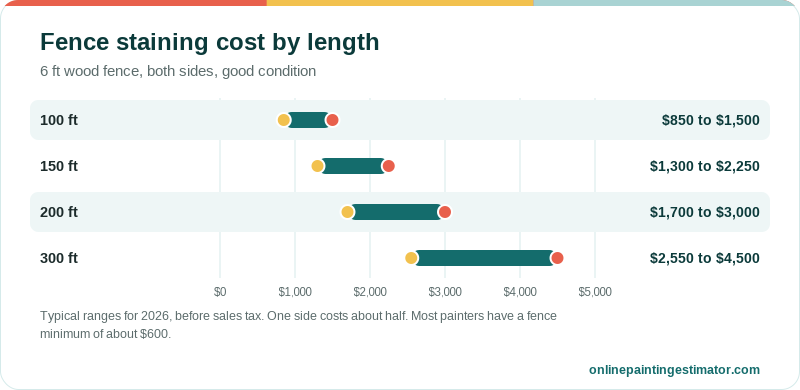
Notice that the shortest fences all land at $600 to $900. That is the job minimum most painters set for fence work, since setup, travel and cleanup take about the same time whether the fence is 60 feet or 120 feet. If your fence is short, adding the gate, a second section or a stretch along the side yard often costs little more.
How to measure your fence
Walk the fence line with a tape or a measuring wheel and add up every run, including gates. Note the height of each section, because 4 foot and 6 foot fences are priced differently. Then decide whether you want one side or both. If the neighbor’s side faces their yard, they may be happy to split the cost of doing both sides at once.
Stain or paint?
Most wood fences in Washington are cedar, and most homeowners stain them. Our price ranges cover either finish, but the choice changes how the fence looks and how often you will redo it.
- Semi-transparent stain soaks into the wood and lets the grain show. It looks natural on cedar, but it fades sooner and needs recoating more often.
- Solid stain covers the grain like a thin paint while still letting the wood breathe. It hides weathering and mismatched boards well and generally lasts longer than semi-transparent.
- Paint gives the most uniform color, and it is common on picket fences and fences that match the house trim. Once a fence is painted, going back to a natural stain look is a big job.
Switching from paint or solid stain to a semi-transparent stain usually means stripping the old coating. That is a separate scope, so ask for it as its own line on the estimate.
What raises the price
Condition of the wood
Condition is the biggest lever after length. A fence that has gone gray, has peeling coating or is covered in moss needs more washing, scrubbing and spot work before stain will soak in evenly. On 150 feet of 6 foot fence, one side:
| Condition | Typical range |
|---|---|
| Good: faded color, sound wood | $650 to $1,150 |
| Fair: gray boards, some peeling | $750 to $1,300 |
| Poor: heavy peeling, mildew, worn wood | $850 to $1,450 |
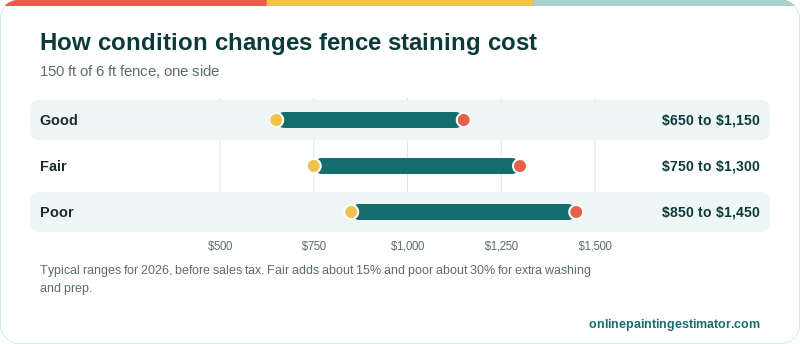
For both sides of the same fence in poor condition, expect about $1,650 to $2,950.
Height and style
A 6 foot privacy fence has much more surface than a 4 foot picket fence, which is why it costs more per foot. Board-on-board and shadowbox designs have more edges and gaps to coat. Lattice tops, decorative caps and arbors are slow brush work and may be priced on top.
Access and plants
Shrubs, vines and raised beds along the fence line slow the crew down, and stain overspray needs careful masking near siding, patios, cars and plants. Clearing a few feet along the fence before the crew arrives helps the job go faster.
Repairs
Rotted posts, loose boards and leaning sections should be fixed before staining, since a new coat will not save failing wood. Most painters price carpentry separately, or recommend a fence contractor for bigger repairs.
How fence staining works
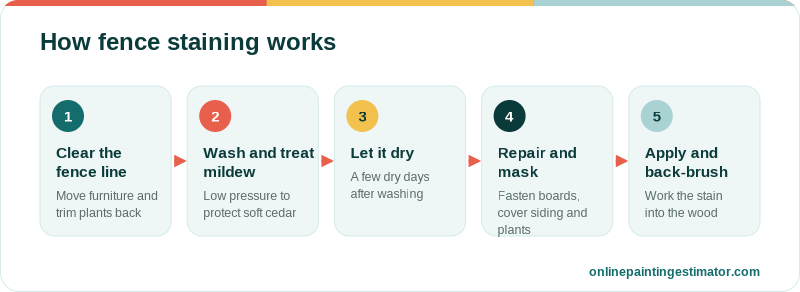
- Clear the fence line. Pull furniture, pots and toys away, and trim plants back.
- Wash and treat mildew. A gentle wash or a wood cleaner removes dirt, gray fibers and mildew. Too much pressure can scar soft cedar, so good painters keep it low.
- Let it dry. Wood needs to dry out before stain goes on. In Western Washington that can take a few dry days after washing.
- Repair and mask. Loose boards get fastened, and siding, concrete and plants get covered.
- Apply and back-brush. Many painters spray the stain, then back-brush it to work it into the wood for an even, lasting finish.
When to stain a fence in Washington
Stain needs dry wood and dry weather while it soaks in. West of the Cascades, that usually means late spring through early fall, with July through September the most dependable stretch. Fences under big firs and cedars stay damp longer, so shaded sections may need extra drying time even in summer. East of the mountains the season starts earlier and runs drier, but hot afternoons can make stain dry too fast, so painters often work the shady side first.
Our guide to the best time to paint a house exterior in Western Washington explains how painters plan around the weather, and the same rules apply to fences.
Bundle it with the house
The cheapest time to stain a fence is while a crew is already at your home. If you are painting the exterior, add the fence to the same estimate, since setup and travel are already covered and you avoid the separate job minimum. Our guide to what it costs to paint a house in Washington covers exterior, interior and cabinet prices in one place.
Decks are different. Painters price them after seeing them, because the right prep depends on what was used before and how worn the boards are.
Hiring a painter for your fence
Fence work is still contractor work in Washington. Check that the painter has an active Washington L&I contractor registration, a bond and general liability insurance. Our guide on how to check a painter’s license, bond and insurance shows how in a few minutes.
When bids come in, make sure each one prices the same length, height and sides, and says which stain and how many coats. Our guide on how to read a painting estimate shows what a complete bid should include. Washington also charges sales tax on painting for homeowners, so add it to the prices above.
Get your fence estimate
Measure your fence, note the height and pick one side or both, then use our free painting estimator to see a typical range in about two minutes. You can set a budget, and verified painters who fit your job send bids.
Common questions
How much does it cost to stain a fence in Washington?
A 6 foot wood fence typically costs about $4.25 to $7.50 per linear foot, per side, to stain or paint. That puts 150 feet of 6 foot fence at about $650 to $1,150 for one side, or $1,300 to $2,250 for both sides, before sales tax.
Is it cheaper to stain one side of a fence?
Yes. Most painters price each side separately, so one side costs about half as much as both. Many homeowners stain only the side that faces their yard, but staining both sides protects the wood more evenly.
How often should a fence be stained in Western Washington?
It depends on the stain, the sun and how wet the fence stays. Semi-transparent stains usually need a fresh coat sooner than solid stains, and shaded sections that stay damp wear faster. Recoating once the color fades, before the wood turns gray, keeps prep and cost down.
What is the minimum price to stain a small fence?
Most painters have a minimum of about $600 for a fence job. That means a short run of 4 foot fence often costs about the same as a longer one, so it pays to bundle gates, a second section or other outdoor work.
Know your number before you call a painter
Get a free price range for your project, check it against your budget, then get bids from verified, insured local painters.