If your Washington home was built before 1978 and the painting job will scrape, sand or cut into old paint, the painter must be certified for lead-safe renovation (RRP) and follow lead-safe work practices. That does not mean you can’t paint an older home. It means the prep, containment and cleanup have to be done a specific way.
This guide explains why the rules exist, what a lead-safe job looks like, how to check a painter and how to get your home ready.
Why 1978 matters
Lead-based paint was banned for use in homes in 1978. Houses built before then may still have it, usually under layers of newer paint. As long as it stays intact, it is mostly a hidden layer. The risk comes when it is disturbed. Scraping, sanding and demolition turn old paint into chips and fine dust that can settle on floors, sills and soil around the house.
Lead dust is especially harmful to young children and during pregnancy, and it can be hard to see. That is why the rules focus on keeping dust contained and cleaning it up thoroughly.
Not sure when your home was built? Your county assessor’s property record usually lists the year.
Western Washington has a lot of homes that fall into this group. Seattle’s Craftsman neighborhoods, North Everett, Tacoma’s North End and many mid-century ramblers across the region were all built before 1978. Our guides to exterior painting in Seattle, house painting in Everett and house painting in Tacoma cover those homes in more detail.
What the RRP rule requires
RRP stands for Renovation, Repair and Painting. It is a federal rule, and Washington runs its own version through the Department of Commerce. In plain terms:
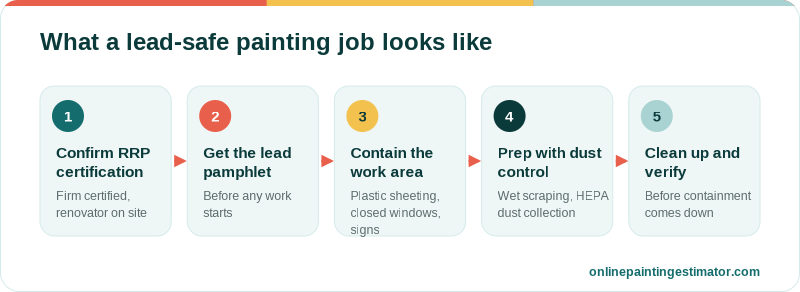
- The firm must be certified. The painting company itself needs RRP firm certification.
- A certified renovator must be on the job. At least one person trained in lead-safe practices directs and checks the work.
- You get the lead pamphlet first. Before work starts, the painter gives you an information pamphlet about lead hazards during renovation.
- Some methods are off limits. Open-flame burning of paint and high-speed sanding or grinding without dust collection are not allowed.
- Cleanup is checked. The work area is cleaned and verified before the containment comes down.
The rule applies to paid work. Very small touch-ups can fall under an exemption, but most painting projects that include real prep on an older home are covered. If you are not sure whether your job qualifies, ask the painter to explain how they will handle it.
What a lead-safe painting job looks like
Outside the house
On an exterior job, the crew lays plastic sheeting on the ground around the house to catch chips. They close nearby windows and doors and keep pets and people out of the area. Scraping is often done wet to keep dust down, and any sanding uses tools with HEPA dust collection. At the end of each day, debris is collected and bagged rather than washed into the yard.
Inside the house
Indoors, the crew moves furniture out or covers it, seals off doorways and vents with plastic, and puts down protective floor covering. Prep is done with dust-control methods, and cleanup uses HEPA vacuums and wet wiping. You should stay out of the work area until cleanup is complete.
Windows and doors
Old wood windows and doors are where lead paint wears the most, because sashes rub and doors swing. Painters usually spend extra care on these parts of the house. Replacing or stripping windows is a bigger scope, so ask for it as a separate line if you want it.
How lead-safe work affects the price
Lead-safe work takes more time and materials, so it can add to the cost. How much depends on how much paint is disturbed, the condition of the surfaces and whether the job is inside or out.
The bigger driver on most older homes is the condition of the paint. Peeling and alligatored paint needs much more scraping and priming. In our estimator, fair condition adds about 15% and poor condition about 30% to the base price. If you see wide differences between bids, look at whether each one includes containment, the same prep and the same cleanup. Our guide on how to read a painting estimate shows what a complete scope should list.
A bid far below the others on a pre-1978 home is a warning sign. Containment and cleanup are real costs, and a painter who leaves them out is cutting a corner that matters.
How to check a painter’s certification
Before you sign, ask for the painter’s RRP firm certification and the name of the certified renovator who will be on site. You can confirm the firm through the Department of Commerce’s lead program, which keeps a list of certified firms.
Also check the basics every Washington painter needs: an active L&I contractor registration, a bond and general liability insurance. Our guide on how to check a painter’s license, bond and insurance walks you through each lookup.
Every painter in the Online Painting Estimator network is checked for registration, bond and insurance, and pre-1978 homes are matched only with lead-safe certified painters.
How to prepare your home
- Tell every painter the year your home was built. It changes how they plan and price the job.
- Clear the area. Move outdoor furniture, toys, pots and garden tools away from the house, or empty the room for interior work.
- Plan around kids and pets. Keep them away from the work area until cleanup is done. For interior work, ask the painter how long each room will be closed off.
- Hold off on garden work. Don’t plant vegetables along the house until the job is cleaned up.
- Ask about the schedule. Exterior work needs dry weather, and lead-safe containment on the ground works best when it is not windy. Our guide to the best time to paint a house exterior in Western Washington explains the season.
What about doing it yourself?
The RRP rule covers contractors, not homeowners working on their own homes. The health risks are the same, though. If you plan to scrape or sand old paint yourself, read up on lead-safe practices first, protect the area, avoid dry sanding and keep children away until everything is cleaned. For larger jobs, a certified painter is usually the safer choice.
Get an estimate for your older home
Use our free painting estimator to see a typical price range for your home in about two minutes. Tell us the year your home was built and its condition, and we will only send your request to painters who are certified for lead-safe work. To compare that range with the wider market, see what it costs to paint a house in Washington, then get your free estimate.
Common questions
Do I need a lead-certified painter for a house built before 1978?
If a paid contractor will scrape, sand or otherwise disturb painted surfaces in a home built before 1978, the firm must be certified for lead-safe renovation (RRP). In Washington, that certification is run by the Department of Commerce.
How do I know if my house has lead paint?
Homes built before 1978 may have lead paint under newer coats, and the older the home, the more likely it is. A certified lead inspector or risk assessor can test it. Many painters simply treat pre-1978 paint as if it contains lead and follow lead-safe practices.
Does lead-safe painting cost more?
It can, because containment, careful prep and cleanup take extra time and materials. The difference depends on the home and how much paint is disturbed, so ask each painter how lead-safe work is included in their price.
Can I stay in my house while lead-safe painting is done?
Often yes, as long as the work area is sealed off and you stay out of it until cleanup is done. Families with young children or anyone pregnant should ask the painter about timing, and some choose to stay elsewhere during interior work.
Know your number before you call a painter
Get a free price range for your project, check it against your budget, then get bids from verified, insured local painters.